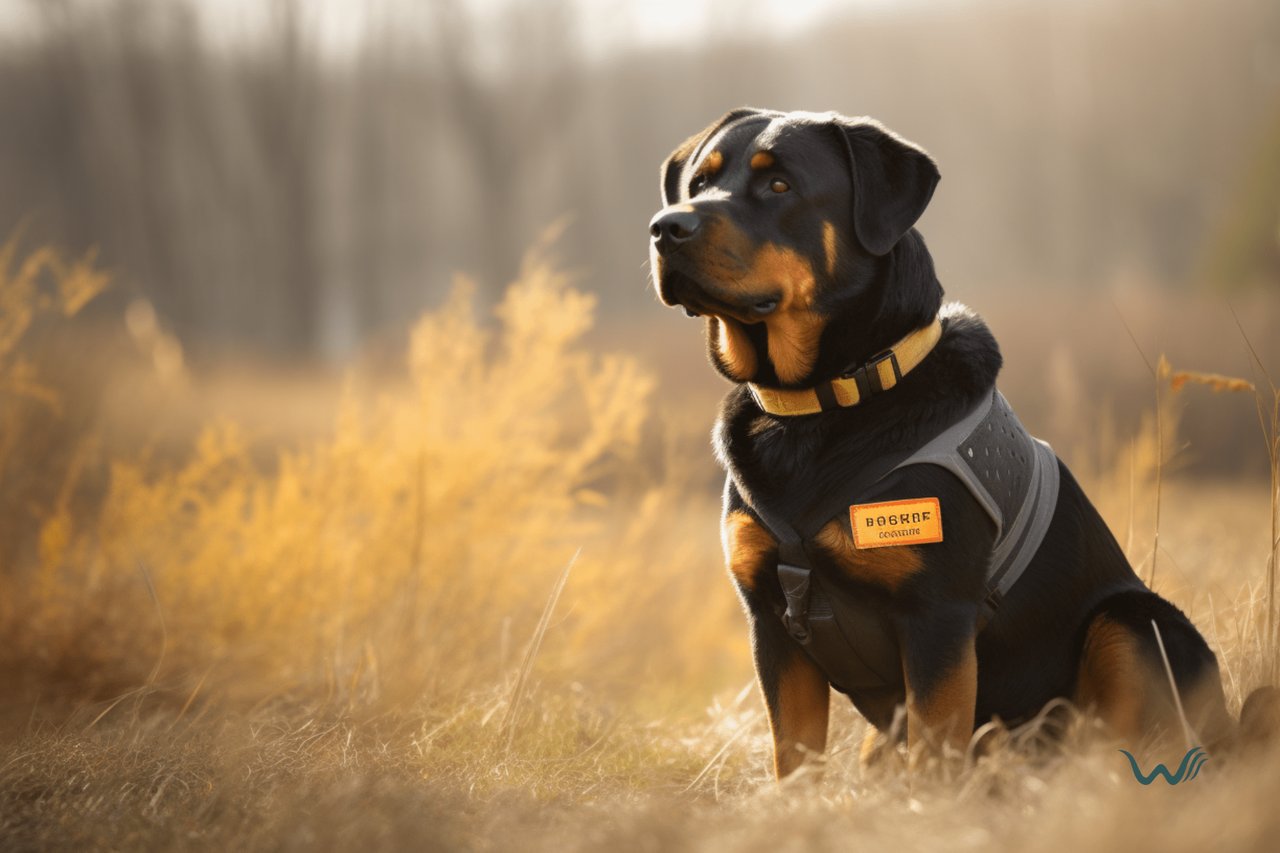

Many dog owners wonder if their beloved pets can be trained to become service dogs, and this question often arises when it comes to Rottweilers.
Rottweilers are known for their strength, loyalty, and intelligence, making them a popular choice for various roles, including service work. However, training a Rottweiler to be a service dog requires careful consideration and understanding of the specific requirements and responsibilities involved.
This article will explore the possibility of training a Rottweiler to be a service dog. By the end, you will have a comprehensive understanding of whether or not your Rottweiler can be trained to fulfill the vital role of a service dog.
Understanding Service Dogs and Their Roles
Unlike emotional support animals, service dogs are specifically trained to perform tasks that mitigate their owner’s disabilities. These tasks can include but are not limited to, guiding individuals who are visually impaired, alerting individuals who are deaf or hard of hearing to sounds, retrieving items for individuals with mobility impairments, and even providing physical support or balance for individuals with mobility limitations.
Service dogs are trained to be reliable, well-behaved, and responsive to their owner’s commands, ensuring they can perform their tasks effectively and safely.
The benefits of service dogs for individuals with disabilities are numerous. First and foremost, service dogs provide a sense of independence and freedom for individuals who may otherwise rely on the assistance of others. They can help individuals navigate their environment, perform daily tasks, and participate in activities that they may not have been able to do on their own.
Service dogs can provide emotional support and companionship, which can be incredibly valuable for individuals with disabilities who may experience feelings of loneliness or isolation. These dogs are trained to be calm, gentle, and attentive, making them excellent companions for their owners.
Understanding the Difference Between Psychiatric Service Dogs and Emotional Support Animals
When it comes to psychiatric service dogs (PSDs) and emotional support animals (ESAs), confusion often arises due to their shared goal of aiding their owners. However, their roles and the rights they have significantly differ.
Role and Training
- Psychiatric Service Dogs (PSDs): These dogs are meticulously trained to assist individuals with mental health disorders. They are equipped to perform specific tasks that directly mitigate the effects of a psychiatric illness, such as PTSD or severe anxiety. Their training allows them to support their handlers in navigating daily life safely and effectively.
- Emotional Support Animals (ESAs): In contrast, ESAs provide comfort and emotional relief simply by being present. They do not have specialized training to perform tasks that aid in the management of a mental health condition.
Legal Rights and Accessibility
- Public Access: PSDs have the right to accompany their owners almost anywhere, including places where pets are typically prohibited. This is because they are recognized as service animals under the Americans with Disabilities Act (ADA). As a result, they can accompany their handlers into “no pet” zones like restaurants and airplanes.
- Emotional Support Animals (ESAs): ESAs do not have the same legal status. While they may live with their owners in housing with “no pets” policies due to the Fair Housing Act, their public access is limited. Retailers and other public places may choose whether to allow ESAs, and their decision must be respected by the handler.
Training and Ownership
- Training: PSDs undergo extensive and specific training to tolerate various environments and perform their duties, ensuring they are adaptively responsive to the needs of their owners.
- Emotional Support Animals: ESAs do not require special training and offer support through companionship rather than task-driven assistance.
Understanding these differences is crucial for both pet owners and those who may encounter these animals in public settings. Respecting their distinct roles ensures that both PSDs and ESAs can continue to provide the vital support their owners need.
Assessing the Suitability of a Rottweiler for Service Work
Assessing whether a Rottweiler is suitable for service work involves evaluating various factors. One crucial consideration is evaluating the temperament of the dog. Service dogs need to have a calm and stable character to perform their tasks effectively. Rottweilers, known for their loyalty and protective nature, can be suitable for service work if they have the right temperament.
It is essential to assess their response to different situations, such as loud noises, crowded spaces, and unfamiliar environments. A Rottweiler with a balanced temperament, showing confidence without aggression, can be a good candidate for service work.
Another crucial aspect to consider is socialization and obedience training. Service dogs must be well-socialized to interact appropriately with people and other animals in various settings. They need to be comfortable and friendly while remaining focused on their tasks.
Obedience training is also fundamental to ensure that the dog can follow commands reliably. Rottweilers, as intelligent and trainable dogs, can excel in obedience training. Be sure to provide consistent and positive training methods to foster their obedience skills.
Training Requirements for a Service Dog
Here are some training requirements to consider when training a Rottweiler to be a service dog:
- Socialization: One of the key aspects of training a service dog is socialization. It’s essential to expose the Rottweiler to different environments, people, and situations from a young age. This helps them develop confidence and adaptability, which are essential qualities for a service dog.
- Obedience Training: Service dogs need to be highly obedient and responsive to commands. Basic obedience training is a crucial foundation for any service dog, including Rottweilers. This includes commands such as sit, stay, come, and walking on a leash without pulling.
- Specific Task Training: Service dogs may need to be trained for specific tasks depending on the specific needs of the individual they will be assisting. This could include retrieving items, opening doors, turning on lights, or providing balance support. Training techniques such as positive reinforcement and clicker training are commonly used to teach these tasks.
Understanding Which Disabilities Qualify for a Service Dog
Service dogs play a crucial role in enhancing the quality of life for individuals with disabilities. These specially trained animals can assist people with a variety of physical, mental, or emotional challenges. Let’s explore how different disabilities can qualify someone for a service dog.
Physical Disabilities
For individuals with physical disabilities, service dogs can provide invaluable support. Conditions that might qualify include:
- Mobility Impairments: Assistance with balance, fetching items, or opening doors.
- Visual Impairments or Blindness: Guiding individuals through their surroundings.
- Hearing Loss or Deafness: Alerting to sounds like doorbells or alarms.
Mental and Emotional Disorders
Mental health conditions often require specific interventions, which service dogs are uniquely equipped to provide. Here are some examples:
- Post-Traumatic Stress Disorder (PTSD): Providing comfort during anxiety attacks or nightmares.
- Severe Depression and Anxiety Disorders: Offering tactile support and companionship to reduce symptoms.
- Autism Spectrum Disorders: Helping with sensory processing and social interactions.
Psychiatric Service Dogs (PSD)
Unlike emotional support animals, psychiatric service dogs are trained to perform tasks that assist with specific tasks triggered by psychiatric disorders. Some eligible conditions include:
- Bipolar Disorder: Reminding owners to take medications.
- Schizophrenia: Helping to alleviate symptoms through interaction and attention.
Task Training Requirement
A key criterion for qualifying for a service dog is the ability to train the animal to perform specific tasks that directly mitigate the disability. This means the relationship isn’t just about companionship; the service dog must actively assist the person with specific needs arising from their condition.
Whether dealing with a physical, mental, or emotional disability, service dogs are partners in independence, providing essential support tailored to individual needs. Remember, the criteria for obtaining a service dog can vary, and consulting with professionals or organizations that specialize in service animals can provide clarity tailored to personal circumstances.
What Age is Too Late to Teach a PSD?
When it comes to training a Psychiatric Service Dog (PSD), age isn’t a strict barrier. The key factor is whether the dog can physically accompany and assist you, regardless of how many candles are on their birthday cake.
Young Dogs vs. Older Dogs
- Young Dogs: Puppies and young dogs often learn quickly and adapt readily to new routines. Their energy and eagerness can make the training process efficient.
- Older Dogs: While some people might think older dogs can’t learn new tricks, they actually can. Senior dogs may have a steadier temperament, which can be advantageous for a PSD. It may take a bit more patience, but many trainers find success with mature dogs.
Factors Affecting Training
- Health and Mobility: A dog’s ability to participate actively in training sessions is crucial. Health conditions that limit mobility might demand specialized training techniques but don’t render the dog untrainable.
- Temperament: Regardless of age, a calm and stable disposition is essential for a PSD. Dogs that are naturally anxious or aggressive may face more significant challenges, but with a qualified trainer, it’s not necessarily insurmountable.
- Previous Training: Dogs that have prior obedience training can have a head start. They are often more receptive to PSD training, as they’re accustomed to following commands.
Key Takeaway
In conclusion, while age can influence certain aspects of training, it is far from being a definitive barrier. The focus should be on matching training strategies to the dog’s capabilities and needs, ensuring a successful partnership regardless of their age.
Specialized Tasks and Skills for Service Dogs
While certain breeds may have natural aptitudes that make them well-suited for service work, such as Labrador Retrievers and Golden Retrievers, any breed can potentially become a service dog with the right training and temperament. Rottweilers, known for their intelligence and trainability, have been successfully trained as service dogs in some cases. However, it’s important to note that not all Rottweilers may have the temperament or physical capabilities required for this type of work.
When it comes to training a service dog, it’s advisable to seek guidance from reputable service dog training organizations. These organizations have expertise in selecting and training dogs for service work and can provide valuable guidance on the required tasks and skills. They can help assess the suitability of a Rottweiler or any other breed for service dog work and provide the necessary training and support throughout the process.
These organizations often have access to resources and networks that can assist in finding the right service dog candidate, as well as ongoing support for the dog and their owner. Collaborating with a service dog training organization can greatly increase the chances of successfully training a Rottweiler or any other breed to become a service dog.
Understanding the Task Requirements for Service Dogs
When it comes to service dogs, there’s a common misconception that they must be trained in a multitude of tasks to be considered legitimate. However, the truth is a bit simpler.
Task Essentials for Service Dogs
- Purpose-Driven Training: A service dog is trained to perform tasks directly related to their handler’s specific disability. This means that the exact number of tasks can vary significantly based on the individual’s needs.
- Legal Definition: According to regulations like the Americans with Disabilities Act (ADA), what qualifies a dog as a service animal is its ability to perform tasks that assist with the handler’s disability. This could range from guiding a visually impaired person to detecting changes in blood sugar levels for someone with diabetes.
- Quality Over Quantity: It’s not about the number of tasks but the effectiveness of the tasks performed. A single, well-executed task can be far more valuable than several less pertinent ones.
- Customization and Specialization: Each service dog is unique in its training, tailored specifically to support the individual they’re paired with. Therefore, the focus is on mastering the essential tasks required by its handler, whether that’s one task or several.
Ultimately, a service dog doesn’t need to showcase a long list of tricks or tasks to be recognized as a working animal. The critical factor is the dog’s ability to perform at least one duty that directly aids the handler’s disability, showcasing the personalized nature of their training.
Can I Train a Great Dane to Have the Same Service Dog Capabilities as a Rottweiler?
Yes, a Great Dane can be trained to have the same service dog capabilities as a Rottweiler. With their intelligence, loyalty, and gentle nature, great dane service dogs can be trained for tasks like mobility assistance, alerting to medical issues, and providing emotional support to their owners.
Legal Considerations for Service Dog Certification
While emotional support animals provide comfort and support to individuals with mental health conditions, they don’t have the same legal rights and protections as service dogs. On the other hand, service dogs are specifically trained to perform tasks that mitigate a person’s disability. These tasks can include guiding individuals with visual impairments, alerting individuals with hearing impairments to sounds, or providing assistance to individuals with mobility limitations. It’s essential to understand that service dogs are legally recognized as working animals, while emotional support animals are not granted the same rights.
To certify a service dog, a specific process and set of requirements must be followed. The certification process typically involves extensive training to ensure that the dog is well-behaved, obedient, and capable of performing the necessary tasks to assist their handler. This training is often conducted by professional trainers or organizations specializing in service dog training.
In addition to training, service dogs must also meet certain health and vaccination requirements, as they’re expected to be clean, healthy, and free from contagious diseases. It’s important to note that there is no official government-issued certification for service dogs in the United States. However, some organizations may provide certification or identification cards to verify that a dog has undergone the necessary training and meets the standards of a service dog. Researching and following the specific requirements and guidelines set forth by reputable organizations when seeking certification for a service dog is crucial.
Obtaining a Psychiatric Service Dog
Securing a psychiatric service dog involves a few essential steps to ensure both eligibility and proper training. Here’s a comprehensive guide:
1. Determine Your Eligibility
Before proceeding, evaluate whether you qualify for a psychiatric service dog. This typically requires having a diagnosed mental health condition, such as PTSD, anxiety, or depression, that significantly impacts your daily life.
- Consult a Healthcare Professional: A licensed mental health professional can assess your condition and determine if a service dog will benefit you.
- Obtain Documentation: Secure a recommendation letter from your healthcare provider outlining the need for a service animal.
2. Understand the Responsibilities
Owning a service dog comes with responsibilities. Consider your lifestyle and ability to care for a dog, including feeding, grooming, and regular exercise.
3. Find a Reputable Training Organization
Training a service dog requires expertise. There are several paths you can take:
- Professional Training Programs: Many organizations specialize in training service dogs for psychiatric needs. Some well-known programs include Assistance Dogs International and Paws With a Cause.
- Self-Training: While more challenging, you can also train your dog yourself. It requires significant time and commitment to instill behavior and task-specific training.
4. Choose the Right Dog
Not every dog is suitable to become a service animal. Consider traits such as temperament, size, and energy level. Common breeds used for psychiatric service include Labrador Retrievers, Golden Retrievers, and Poodles.
- Adopt or Purchase: You can adopt a dog from a shelter or purchase from a breeder focused on service dog qualities.
5. Complete the Training
Training can take several months to years, depending on the dog and the tasks they need to perform. Key training elements include:
- Basic Obedience: Foundation skills such as sit, stay, and recall.
- Task Training: Specific tasks to assist with disabilities, like interrupting anxiety behaviors or providing deep pressure therapy.
- Public Access Training: Ensuring the dog behaves appropriately in various public settings.
6. Register and Certify Your Service Dog
While there’s no official registry required in many countries, having clear documentation is helpful. This can include a vest, ID card, or a letter from your trainer.
7. Stay Compliant with Laws and Regulations
Understanding the legal aspects of having a service dog is crucial. Familiarize yourself with laws such as the Americans with Disabilities Act (ADA), which protects your right to have a service dog in public places.
By following these steps, you can successfully obtain and integrate a psychiatric service dog into your life, potentially enhancing your quality of life and independence.
Final Thoughts
While it’s possible to train a Rottweiler to be a service dog, be sure to carefully assess their suitability for this type of work. Rottweilers can be strong and powerful dogs, which can be advantageous for certain service tasks, but they must also possess the right temperament and trainability.
Training a service dog, regardless of breed, requires dedication, time, and patience. It’s essential to ensure that the dog receives proper socialization, obedience training, and specialized task training to meet the specific needs of the individual they’ll be assisting. This includes retrieving items, opening doors, or providing stability and balance.
Additionally, it’s crucial to consider the legal requirements for service dog certification. In many jurisdictions, service dogs must meet certain standards and pass assessments to be officially recognized as a service animal. These requirements may vary, but they often demonstrate the dog’s ability to perform tasks related to the individual’s disability and proper behavior in public spaces.






 Ask ChatGPT
 Ask Claude
 Ask Perplexity