

Emotional Support Animal (ESA) Letter for College Students






Explore ESA Policies of Colleges Near You

Brown University

California Institute of Technology

Carnegie Mellon University

Columbia University

Cornell University

Dartmouth College

Duke University

Emory University

Georgetown University

Harvard University

Johns Hopkins University

Massachusetts Institute of Technology

Northwestern University

Princeton University

Rice University

Stanford University

UC Berkeley

UNC Chapel Hill

University of Chicago

University of Notre Dame

University of Pennsylvania

Vanderbilt University

Yale University
Why You Can Rely On Us?
At Wellness Wag, we believe your pet deserves care rooted in both science and compassion. Each article is carefully researched, written in clear language for pet owners, and then reviewed by qualified professionals to ensure the information is evidence-based, current, and practical for real-life care. Our goal is to help you feel confident in making informed decisions about your pet’s health and well-being.
Reviewed by
Angela Morris, MSW, LCSW
Angela is a licensed clinical social worker with 20 years of experience in patient advocacy and community mental health. She has assisted numerous clients with ESA evaluations and brings a deep understanding of disability accommodations, ensuring that all information is accurate, supportive, and practical.

Frequently Asked Questions
In most cases, yes. Most colleges receive federal funding, so Section 504 of the Rehabilitation Act requires them to make reasonable accommodations for students with disabilities, which can include an ESA in campus housing. Your request goes through your school’s process, and the college reviews it case by case.
Start by contacting your school’s disability services or housing office to learn its process. Most colleges ask you to fill out an accommodation request form and submit an ESA letter from a licensed provider. Some schools also meet with you to discuss your needs before approving the request.
As early as possible. Many colleges set deadlines before each semester, and the review can take several weeks. Applying early also gives the housing office time to arrange a suitable room and roommate placement for you and your ESA.
Your letter should come from a licensed provider and confirm that you have a condition that limits your daily life and that your ESA helps with it. It should include your provider’s name, license number, contact details, signature and the date it was issued. Some colleges also ask your provider to complete their own form, so check your school’s requirements first.
Colleges generally can’t charge pet fees or deposits for an approved ESA, because it’s an accommodation rather than a pet. You’re still responsible for any damage your animal causes, and your school may bill you for repairs or extra cleaning.
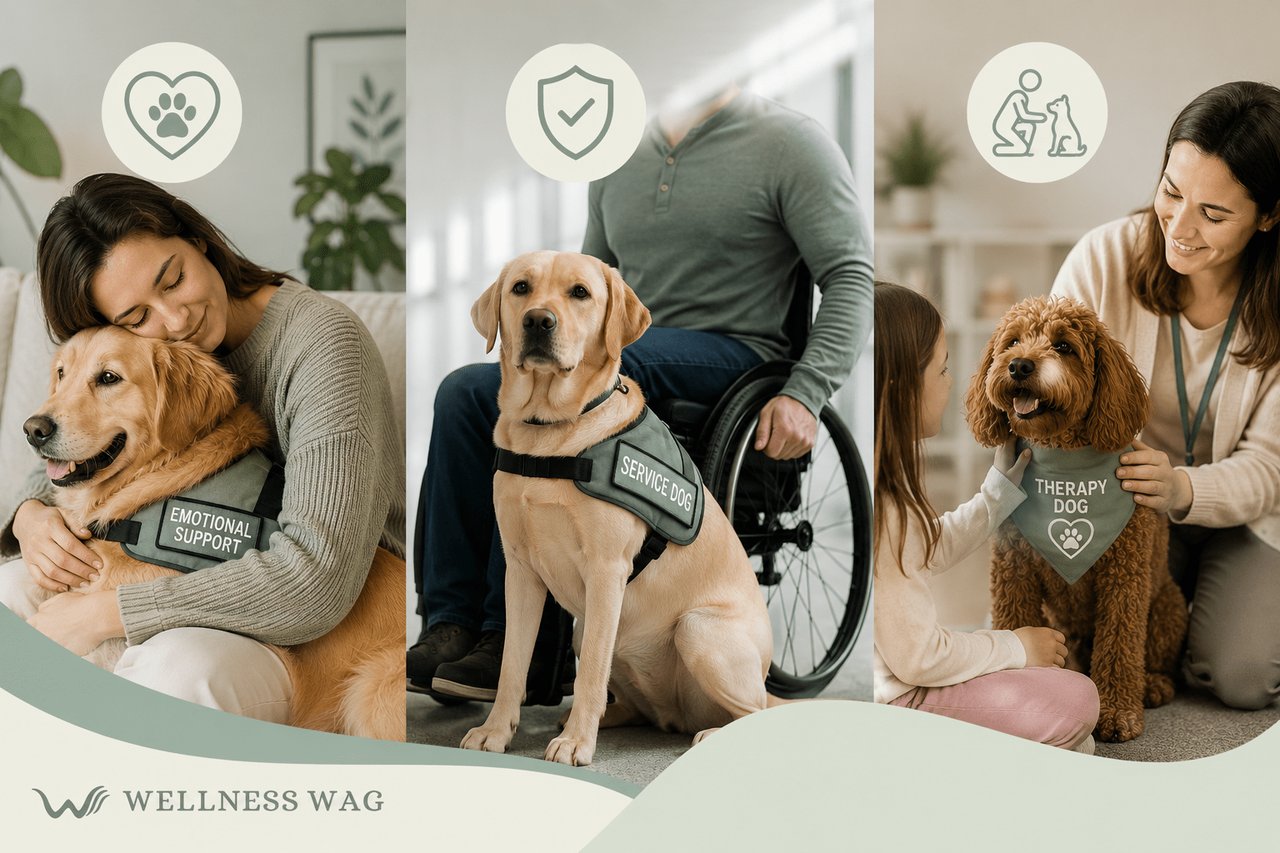
Your ESA is usually allowed in your dorm room and the residence hall’s common areas, depending on your school’s policy. ESAs don’t have public access rights, so they typically aren’t allowed in classrooms, libraries, dining halls or other campus buildings. Only trained service dogs can go everywhere on campus.
Yes. Under the ADA, a trained psychiatric service dog can go anywhere students are allowed on campus, including classrooms, libraries and dining halls. Staff can ask only whether the dog is required because of a disability and what task it has been trained to perform. For campus housing, it’s best to let your housing or disability services office know in advance, since some schools ask for basic information about your need. A PSD letter from a licensed provider can support that request.
Yes, in certain situations. A college can deny a request if your documentation doesn’t show a disability-related need, if the animal poses a direct threat to others’ health or safety, or if it would cause significant property damage. Your school can also remove an approved ESA that isn’t kept under control or that causes major disruption.
Latest from
Our Library






Having a Hard Time to Decide?
Talk with your favorite AI assistant or connect with a licensed professional to see how Wellness Wag can help you qualify for an ESA letter online.
 Ask ChatGPT
 Ask Claude
 Ask Perplexity
Are You Ready to Start the Process?
Say goodbye to pet fees and always have your beloved companion by your side, no matter where you live.
Get an ESA Letter Now